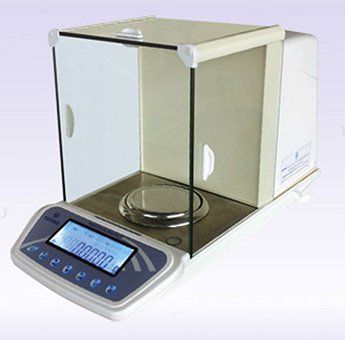
Where to Place a Precision Balance: Bench, Draft and Vibration
The best location for a laboratory balance: stable table, no draft, steady temperature and clean power. A short checklist to protect your accuracy.
The same balance can give good or bad results depending on where it sits. Before blaming the instrument, check the location.
The table
Use a solid bench or a heavy weighing table that does not flex or shake. Do not use a table that is shared with a centrifuge, a shaker or a vacuum pump. A stone or granite top is common for sensitive balances.
Air movement
Keep away from doors, windows, AC vents and fans. Even gentle air moves a 0.1 mg reading. Use the draft shield and keep its doors closed while reading.
Temperature and sun
A steady room temperature helps. Avoid direct sunlight and nearby heaters, and do not place a cold sample on a warm pan, it creates a false drift as it warms.
Level and distance
Level the unit with the bubble indicator. Keep it a little way from the wall so you can use it comfortably, and with space for a logbook.
Power and static
Plug it into clean, stable power. If the supply is poor, a small UPS helps. In dry weather control static with an anti-static device.
Once placed, calibrate it. If the reading still wanders, follow the drift checklist. Choosing a balance? See analytical vs precision or contact us.