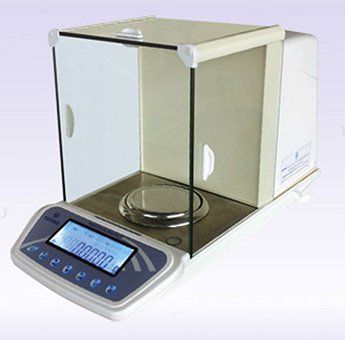
How to Calibrate a Laboratory Balance: Internal vs External
Internal and external calibration explained, how often to calibrate, and what you need (certified weights, a level bench, a steady room).
Calibration checks that the balance reads correctly against a known mass and adjusts it if not. Without it, a balance can look fine and still give wrong results.
External calibration
You place a certified test weight on the pan and the balance adjusts itself to it. This is how most balances are calibrated. It needs good standard test weights and the weight should be near the balance capacity.
Internal calibration
Some balances carry a built-in reference weight and a motor. They can calibrate at the press of a button, or automatically when the temperature changes. This is convenient for busy labs, though a periodic check with an external weight is still good practice.
Basic steps
- Switch on and let the balance warm up as the manual says, often 30 to 60 minutes for analytical models.
- Make sure it is level and the pan is clean and empty.
- Start the calibration function and place the weight only when prompted.
- Handle weights with forceps or gloves, never bare fingers.
- Check afterwards with a second weight and record the result.
How often
Calibrate when the balance is moved, after a big temperature change, and on a routine schedule. For regulated or audited work follow your quality procedure and keep a written log. A full service by a qualified person once a year is common.
Related: daily care and why a scale drifts. Need weights or a new balance? Contact us.