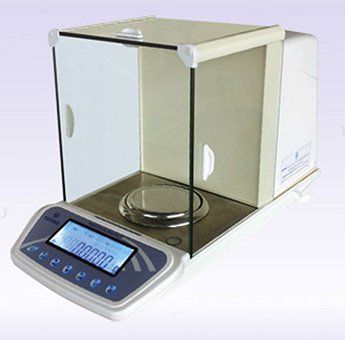
Analytical Balance vs Precision Balance: Which Do You Need?
The real difference between analytical (0.1 mg) and precision (0.01 g to 1 g) balances, who needs which, and how to avoid paying for accuracy you cannot use.
Both weigh in a lab, but they solve different problems. Choosing the wrong one wastes money or ruins results.
Analytical balances
Readability is typically 0.1 mg (0.0001 g), with a capacity from about 100 g to 500 g. They have a glass draft shield because even air movement changes the reading. Use them for preparing standard solutions, small samples, pharma and chemical analysis, and anywhere a result is calculated from a very small mass.
Precision balances
Readability usually from 1 mg to 0.1 g, capacity from a few hundred grams up to several kilograms. Most have no draft shield or a small one. Use them for weighing reagents in bulk, formulation, quality checks on packed goods, and general workshop and classroom use.
How to decide
- Smallest sample under 100 mg? Choose analytical.
- Weighing in grams and kilograms, tolerance of 0.01 g or more? Choose precision.
- Need both small and large weighings? Many labs keep one of each. It is cheaper than one over-specified balance and the analytical one lasts longer.
- Need 0.01 mg? See semi-micro balances.
Contec options
We supply the laboratory balance range including analytical and precision series. See also our guide on where to place a balance because placement matters as much as the model.
Share your sample size and tolerance on WhatsApp and we will recommend one.