Capacity vs Readability: What the Numbers on a Scale Mean
Capacity, readability, resolution, repeatability and linearity explained in plain language, with a simple rule for choosing the right balance.
Every scale carries two headline numbers, for example 220 g x 0.1 mg. The first is the capacity, the second is the readability. They pull in opposite directions: the finer the readability, the lower the capacity you can usually get.
Capacity
The maximum load the scale is designed to weigh. Including the weight of any container you place on it (the tare).
Readability
The smallest step on the display, also called resolution or division. A 0.01 g scale shows weights like 12.34 g, 12.35 g.
Repeatability
How closely the scale gives the same reading when you weigh the same item again and again. A scale can show tiny steps and still be poor at repeating.
Linearity
How accurate the readings stay across the full range, not just at one point.
A simple rule of thumb
For about 0.1 percent accuracy, the smallest sample you weigh should be at least around 1000 times the readability. A 0.1 mg balance is therefore comfortable from about 100 mg upwards, in a draft-free place. For tiny samples you need a finer balance, such as a semi-micro balance.
Common pairs
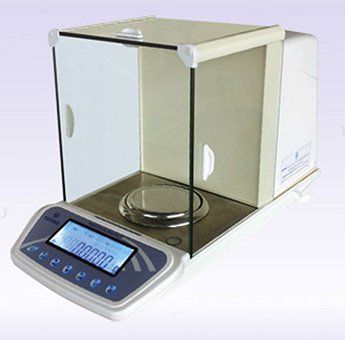
- 0.1 mg: analytical work, see analytical vs precision
- 0.01 g: gold and jewellery, see jewellery scales
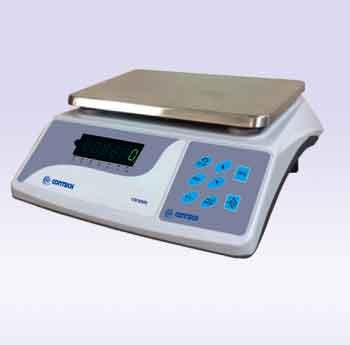
- 0.5 g to 5 g: shop counters, see table top scales
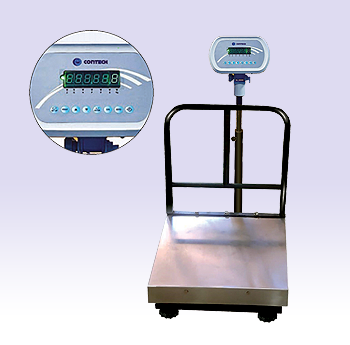
- 50 g and above: godowns, see platform scales
Tell us your heaviest load and smallest difference and we will pick the pair for you via WhatsApp.