How to Choose a Weighing Scale: Capacity, Readability and Use
A simple 4-step method to pick the right weighing scale for a lab, jewellery shop, shop counter or warehouse, without overpaying or buying the wrong model.
Most wrong purchases happen for one reason: the buyer picked a scale by price or by how it looks, not by the job it has to do. Four questions fix that.
1. What is the heaviest load you will weigh?
This sets the capacity. Pick a scale whose capacity is roughly 20 to 30 percent above your heaviest regular load. Never run a scale at its limit every day, and never overload it: a load cell that is hit with twice its rating can be permanently damaged.
2. What is the smallest difference you need to see?
This sets the readability (the smallest step the display shows). A gold counter may need 0.01 g, a school lab 1 mg, a godown only 50 g. Finer readability costs more and needs a calmer place, so do not buy more than the job needs. Our guide to capacity vs readability explains the trade-off.
3. Where will it live?
A clean lab bench, a wet dairy floor, a dusty warehouse and a hot foundry need different builds. Wet areas need a waterproof scale, heavy loads need a platform or pallet scale, and overhead lifts need a crane scale.
4. Is it for trade or for internal use?
If you sell goods by weight, the scale usually has to meet Legal Metrology rules in India. Read our note on trade-use scales before you buy.
Quick match
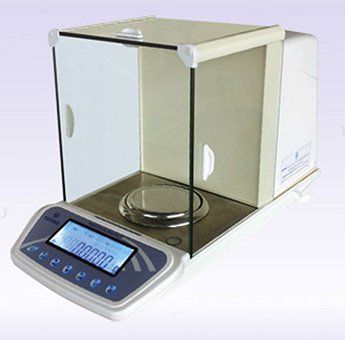
- Lab and research: laboratory balances
- Gold and silver: jewellery scales
- Shop counter and packing: table top scales
- Moisture content of powders and grains: moisture balances
Not sure? Send us the item, the heaviest load and the accuracy you need on WhatsApp and we will suggest the model.